There are many reasons a student can be absent, ranging from being sick or injured to issues surrounding unstable living conditions. However, until recently, section 207.1 of the California Penal Code held parents responsible for chronically truant children, no matter how valid the excuse might be.
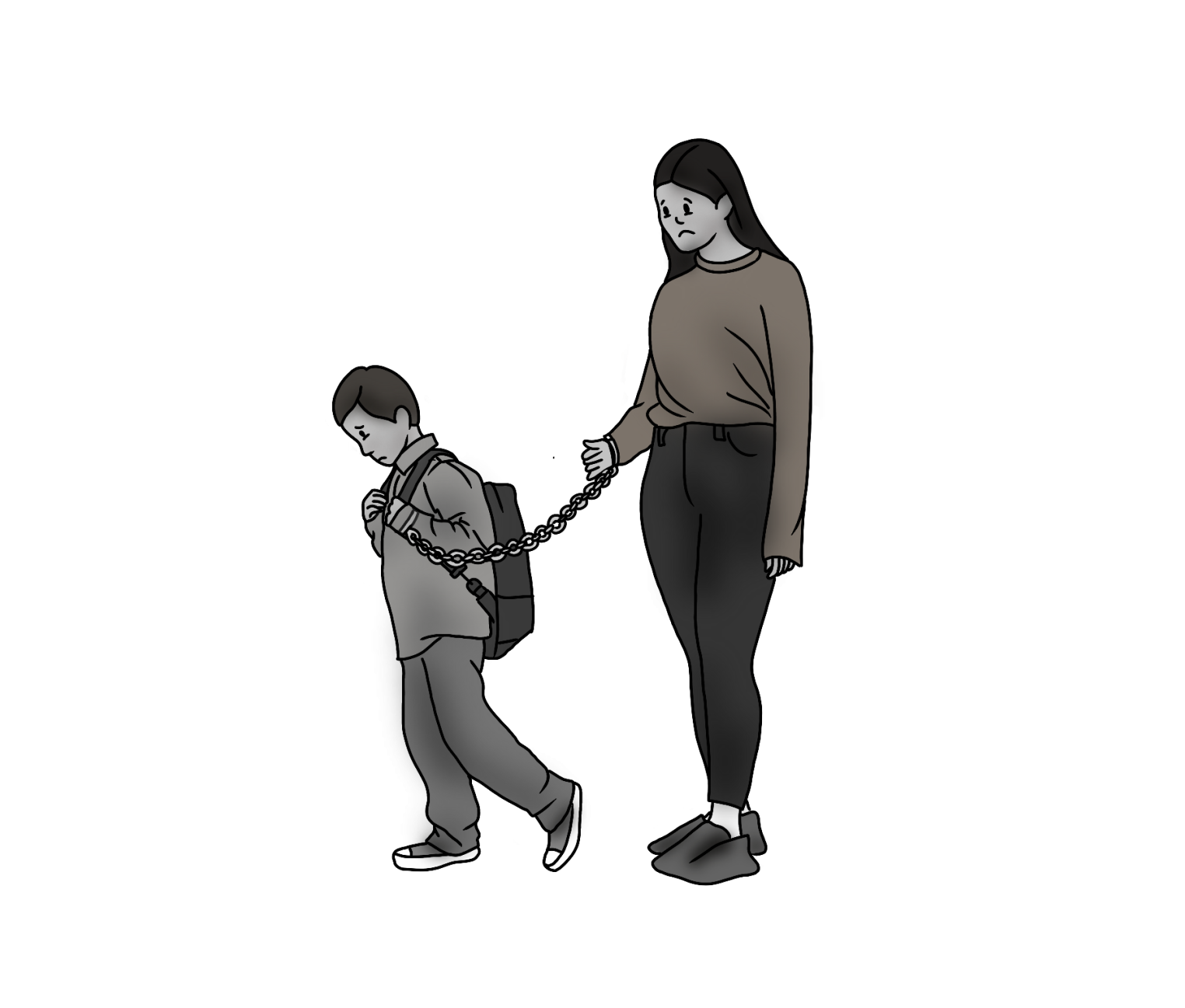
(Illustration by Kaylin Yi)
On Oct. 1, Gov. Gavin Newsom passed Assembly Bill 461, repealing section 207.1. The bill will go into effect on Jan. 1, 2026.
The implementation of AB 461 is crucial for parents who struggle to provide or who are absent from their child’s lives. However, the government must continue aiding parents by providing resources to better assist them.
Before AB 461 was passed, parents of children with more than 10% absences could be jailed or fined up to $2,000, according to LN24. However, factors such as lack of transportation, poor living conditions and the mental health of students were not taken into account, ultimately putting the families’ stability at risk instead of preventing truancy.
In the 2023-2024 school year, Santa Clara County reported 130 truancy cases against parents and guardians, but many of the cases were dismissed or are still ongoing, according to SourceEd. Six of the accused parents pleaded guilty as a result. Truancy is affecting those in our community, yet the issue still remains. If cases are being dismissed, then the county must not blindly punish the parents.
Additionally, rates of absenteeism are highest among students in low-income districts, with 30% of students being chronically absent, according to the Los Angeles Times. Repealing section 207.1 is a strong milestone in fixing truancy in marginalized communities.
Parents who struggle to support their children will not be uplifted by being fined. Rather, the state must shift to a policy that does not drag parents into legal battles with the county. Even though section 270.1 of the California Penal Code was repealed, California must continue to pass laws that will provide parent-specific resources in order for students’ truancy to improve.
In addition, students who may suffer from mental health issues or illness should be better supported by their schools and families.
Only 40% of high school students feel a sense of belonging at school. As a result, nearly half of all California high school students deal with depression or stress, impacting their academics and learning.
Although not implemented in all schools throughout California, HHS does provide many resources that help support students’ mental health and academic success, such as school-based therapists, AVID, counselors or clubs that help form community. All of these programs should be implemented state-wide to make students feel more comfortable and ready for school.
Parents are critical in our development. They teach us how to be the best people we can be, but it is not an easy job, and punishing parents places unnecessary pressure on families. The repealing of section 270.1 is the first step toward reducing truancy and assisting students’ academic standing and well-being.