As the school year comes to an end, most teachers have finals that are the same “study, stress and take a test” cycle, but for World Literature and AP Physics students, they take a different approach to their last month of school.
World Literature: Turning on the mics
In English teacher Rosie Nguyen’s World Literature class, students are showcasing research skills through an interactive podcast format, Nguyen said.
“A lot of students are already listening to podcasts or have been exposed to them in some way through the internet,” Nguyen said. “I wanted them to have the experience of gathering all this research they’ve done, forming an opinion on it and practicing their speaking and presentation skills in the form of a podcast.”
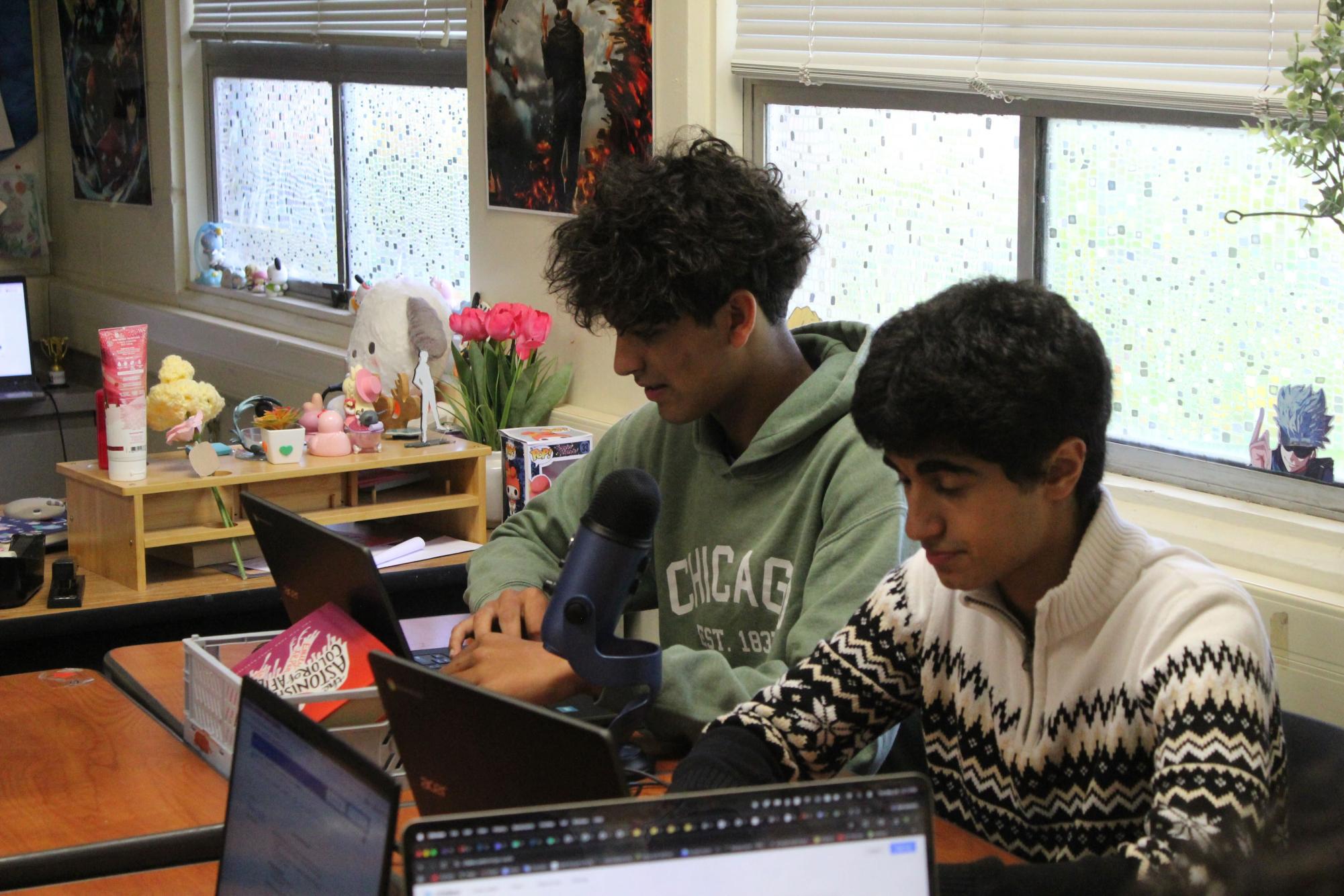
Students picked research topics, interviewed sources and then compiled their findings together into a podcast recording, sophomore Satya Dindi said.
“I learned the importance of considering different perspectives in general,” Dindi said. “When it comes to your normal English class, you only consider countries [like] the U.S. or Europe, but we don’t go deeper and see the economic and societal factors that play in societies of Africa or marginalized communities.”
Altogether, Dindi said the podcast’s long-term format proved less stressful for students, allowing them to take the learning experience to heart.
“It’s not something where you put it all in one piece of paper, but you demonstrate fully throughout [the project] that you’re going to carry these concepts with you throughout your whole life, rather than just a specific course,” Dindi said.
AP Physics 1: Blending crafts with science
Physics teacher Kathleen Shreve said her class is working on a circuit project in which students execute and create an electrical craft, using construction paper and conductive tape, with a mechanical aspect.
“Students get to show creativity and have an art aspect to a science project, ”Shreve said. “Also, there’s a lot of problem solving and troubleshooting that goes into circuits that takes more effort than students expect. It takes them longer than they expect because it’s simple-looking materials, but it takes a lot of thinking to make.”
With weeks of hands-on work culminating in an artistic creation, sophomore Andrew Khayms said the project provided a lighthearted end to the course.
“This final is more of a fun project, rather than something my grade depends on. It’s also an opportunity for me to do things with my friends, other than my tablemates I would usually talk to,” Khayms said. “It’s just a fun end-of-year project that is going to be the highlight of my year in physics.”