As a freshman, I came into high school thinking there was a specific math pathway I needed to take to excel in college. When I learned about the applied math class offered at HHS, I assumed that it was a class meant for students who fell short academically or were not specifically interested in math.
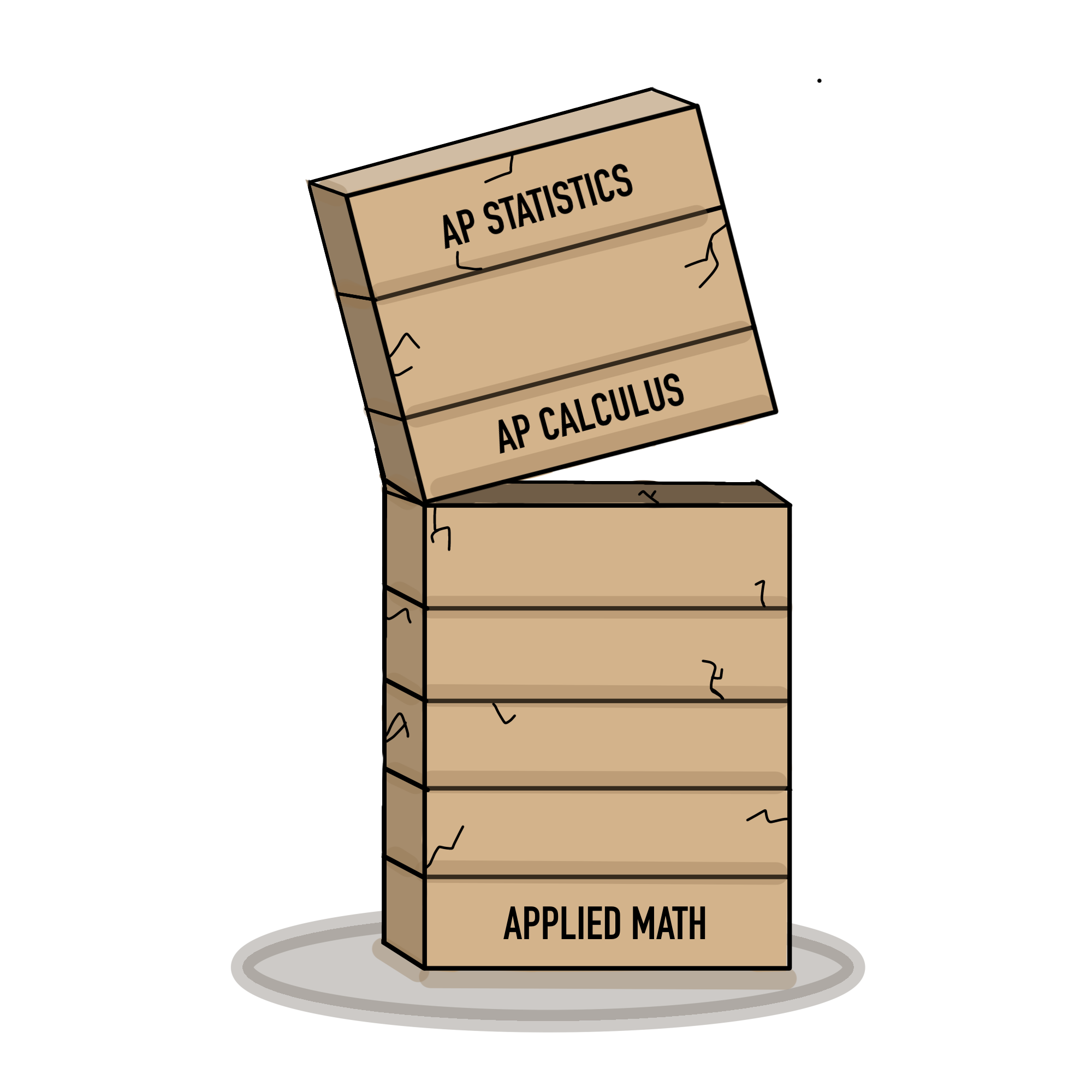
Among students, it is typically considered insignificant or less valuable compared to AP and honors courses due to its less rigorous curriculum. In reality, applied math is a class that offers a variety of key skills that support students even after they graduate from high school.
My friend, who takes the applied math class, explained that she learns how to budget, take care of finances and apply math to real-world problems. Upon hearing this, I realized I had misjudged applied math for not being an AP or honors class, causing me to overlook its multiple benefits.
The applied math class at HHS teaches many skills that are essential to students’ success. Relevant skills, such as analytical and conceptual thinking, help students engage with the real world.
Applied math helps students’ understanding of how to apply math concepts to various scenarios as well as draw connections between topics, according to Harvard EDU. This benefits students by giving them a stronger foundation that can be built on in the subsequent years.
Additionally, students will not be missing out on rigorous learning by taking applied math instead of an AP or honors course. They are required to have the same depth of understanding of the concepts being presented to succeed in the class.
Applied math is especially rewarding for students who are not explicitly interested in pursuing something STEM-related but still plan on going to college. They are introduced to computational skills and data analysis, which can support them in any path they choose to take.
When students constantly referr to applied math as weak or ineffectual, it detracts from the supportive learning environment at HHS. These misconceptions can discourage students who want to explore different avenues in math, preventing them from finding a class that fits their needs.
Students should learn to be open to all math pathways, rather than pressuring themselves or others to take courses just for the sake of rigor. In doing so, they can create an environment for exploration, where all math tracks are considered paths to success.