As I play “Far Cry 5,” ghostly, tense music fills the air as I carefully sneak around, waiting to attack an enemy camp. Suddenly, tense music fills the air as I’m spotted, and I rush around, taking out each enemy. Finally, trumpets blare as the “Outpost Liberated” message flashes on screen.
(Illustration by Henry Hu)
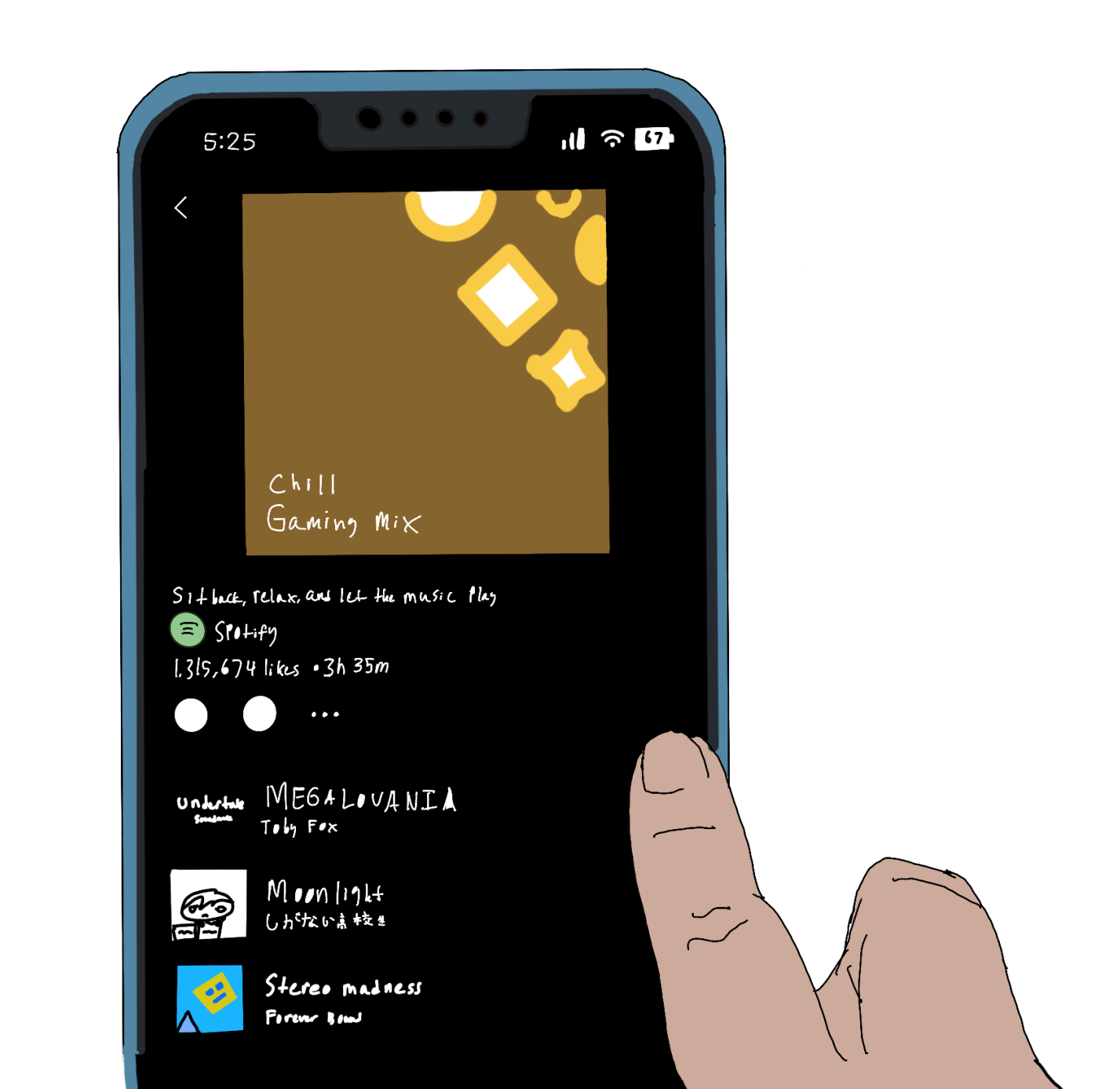
Undoubtedly, music has evolved to become more than a background feature in video games. It is integral to the player experience, as it adds to the emotion and tone of scenes and characters.
Yet, gaming companies choose to minimize investment in music, rather than maximizing it according to Twine. If the industry hopes to continue making successful and entertaining games, they must put more effort into soundtracks, making them a core feature of their games.
Since gaming’s origins, music has been a key feature to set the feel of the game. “Space Invaders,” one of the first popular video games released in 1978, features a techno jingle playing in the background of every level, according to Classic Gaming.
This trend continues now, as music continues to set the tone and genre of a game. Games like “Halo” are universally renowned for their soundtracks that infuse drama and emotion into critical scenes, according to Edge.
For gamers, music draws us into the narratives companies curate, and is the deciding factor between what makes a game great or mediocre.
Despite this, very little of a game’s development budget goes into creating a soundtrack, sometimes as low as 5%, according to Twine. This figure is a drastic underinvestment, given that the sale of video game music alone is expected to grow by 12.4% to a market size of $3.29 billion by 2031, according to Cognitive Market Research.
Thus, video game music is a rapidly developing genre that shows gamers are growing more interested in the soundtracks of games.
Companies that fail to invest properly in their game’s music, ignore player wants and make their games less engaging. For instance, “Halo Reach” was widely criticized by gamers for lacking the dramatic and orchestral music common in most “Halo” games, giving it a detached feel from the franchise, according to Gamesradar.
Companies need to start investing more resources into soundtracks, allocating a larger portion of their budgets, up to 15%, to make music that improves their games’ atmosphere.
To consumers, music is just as important as detailed graphics or story, and companies need to treat it as such. Some modern games recognize this and are making music more of a core feature in their games.
“Fortnite,” one of the most popular battle royale games in the world, made waves earlier this year when it introduced Hatsune Miku and a new rhythm game mode into their game, according to ESPN.
“Fortnite” takes advantage of the interest music can bring into different games by making it a core feature of its game. Other companies should take after “Fortnite” and incorporate music into mechanics or mini games to keep players engaged.
Music is a crucial part of a game’s emotional core, and successful games demand powerful soundtracks. Whether it’s investing more into composing music or making music a key part of video games, one thing is clear: game developers must start bringing music to the forefront of their games rather than only letting it sit in the background.