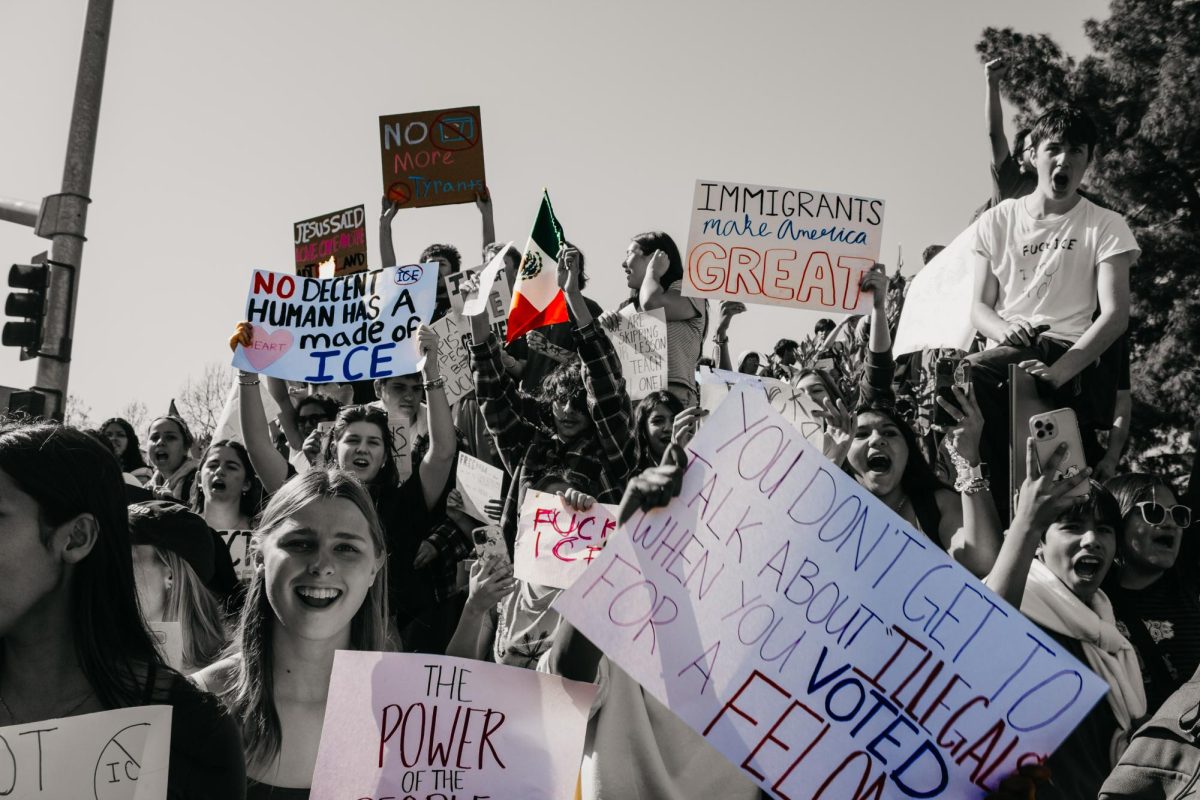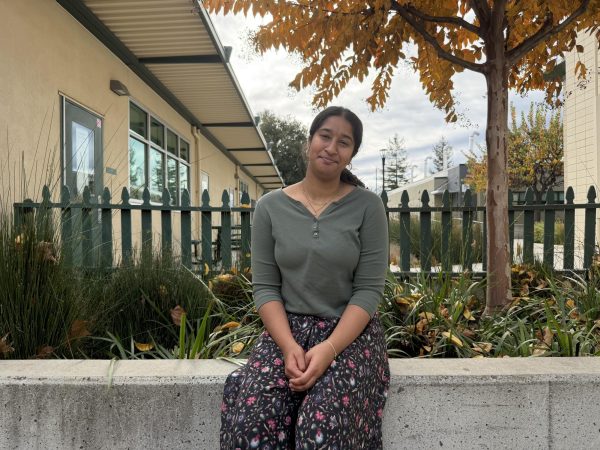

In the week leading up to the Feb. 4 anti-ICE walkout, contributions from teachers, administrators and the Sunnyvale mayor’s office ensured students’ safety as they voiced political concerns, assistant principal Mayra Valdivia said. Soon after word spread of the walkout on social media, HHS administrators began coordinating with student organizers and other adults, Valdivia said.
“We learned over the last few years to work with students, not against students,” Valdivia said. “That was the disposition we took to work with the students. Dr. Nurnberg was the lead in communicating with students who were helping organize this here at HHS.”
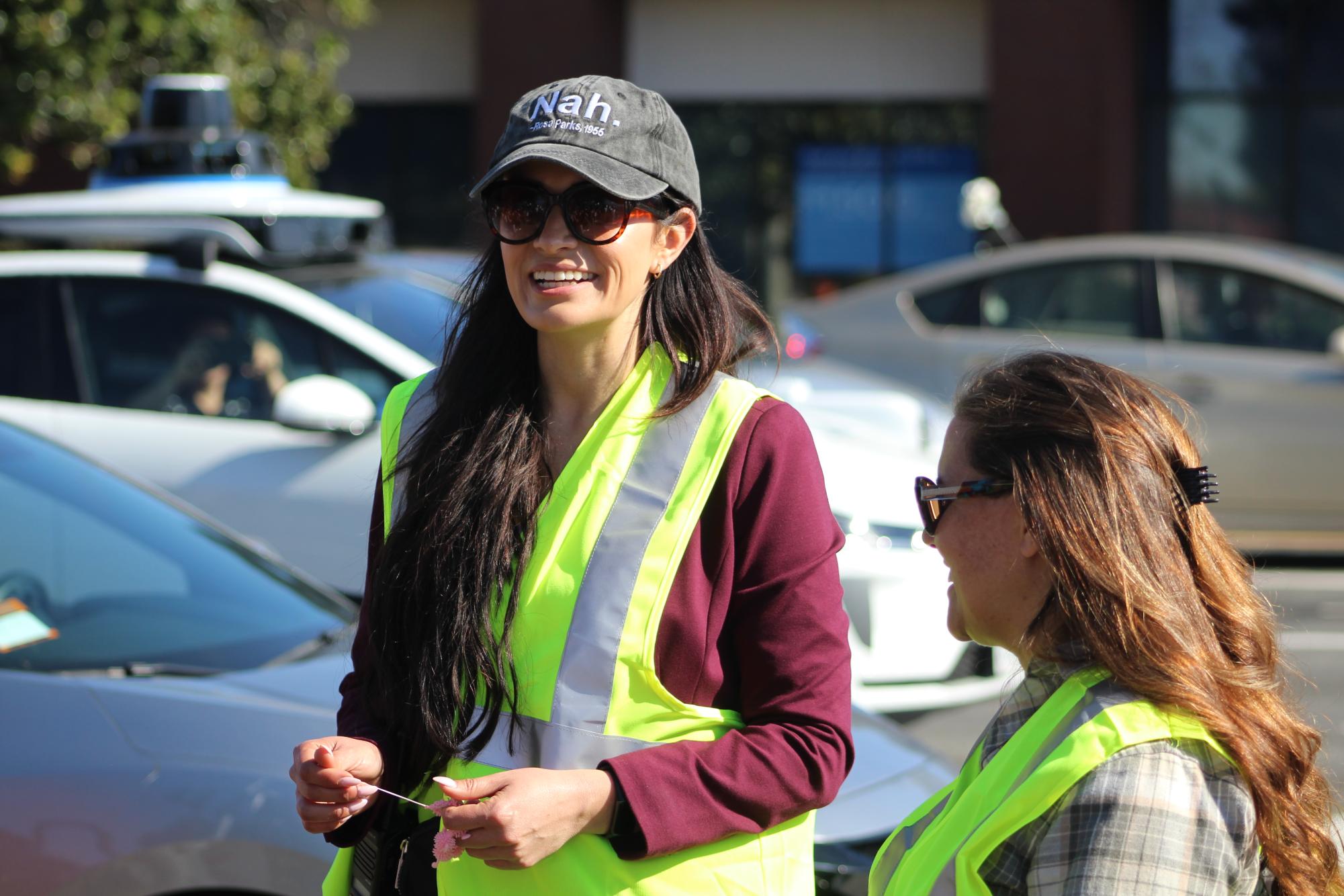
Although the school aimed to respect student independence and is not legally responsible for student protests, staff still decided to provide walkout supervision, principal Denae Nurnberg said.
“We chose to maintain a level of support to ensure safety,” Nurnberg said. “During the school day, we feel very strongly about ensuring that students are under our care. When there are big groups, we choose to go with [them].”
Regarding fifth-period absences for attendees, superintendent Graham Clark said that three days prior to the walkout, a districtwide email covering relevant attendance rules under Senate Bill 955 was sent out. The email also reiterated the importance of proper conduct to reflect positively upon the demonstration and participating schools, Clark added.
“We wanted to make everybody sure what the consequences could be, so we checked with the state at the superintendents conference that week,” Clark said. “We found that we could excuse up to one day [per school year] for people participating in civic activities, so we wanted to let people know that if it was more than one day, the following days would be unexcused.”
Leading up to the walkout, the primary safety concern was busy roads lining the path to the destination at the Sunnyvale-Saratoga intersection, Clark said. To address these traffic concerns, Clark said the district notified Sunnyvale City Council of the walkout, quickly and comprehensively informing mayor Larry Klein and his team of the situation.
With administrators handling logistics and supervision, Klein said that with experience from the 2020 Black Lives Matter protests, he and his team knew the necessary steps to support protesters’ well-being.
“As soon as we heard, we immediately started to talk to Public Safety. They did a fantastic job of making sure the students were safe,” Klein said. “[We] talked to the city manager and police chief to make sure this [was] a peaceful, safe protest in Sunnyvale.”
When students reached the El Paso De Los Suenos monument at the protest location, Klein said he and other city officials walked from nearby city hall to publicly speak with demonstrators and affirm their ability to voice opinions, take action and promote change.
“Democracy doesn’t start when you’re 18 years old. It starts when you stand up and fight for what’s right,” Klein said. “I’m trying to make sure students understand that they have a voice and that they can stand up to tell their elected officials, at the local level and the federal level, what is right and fair.”
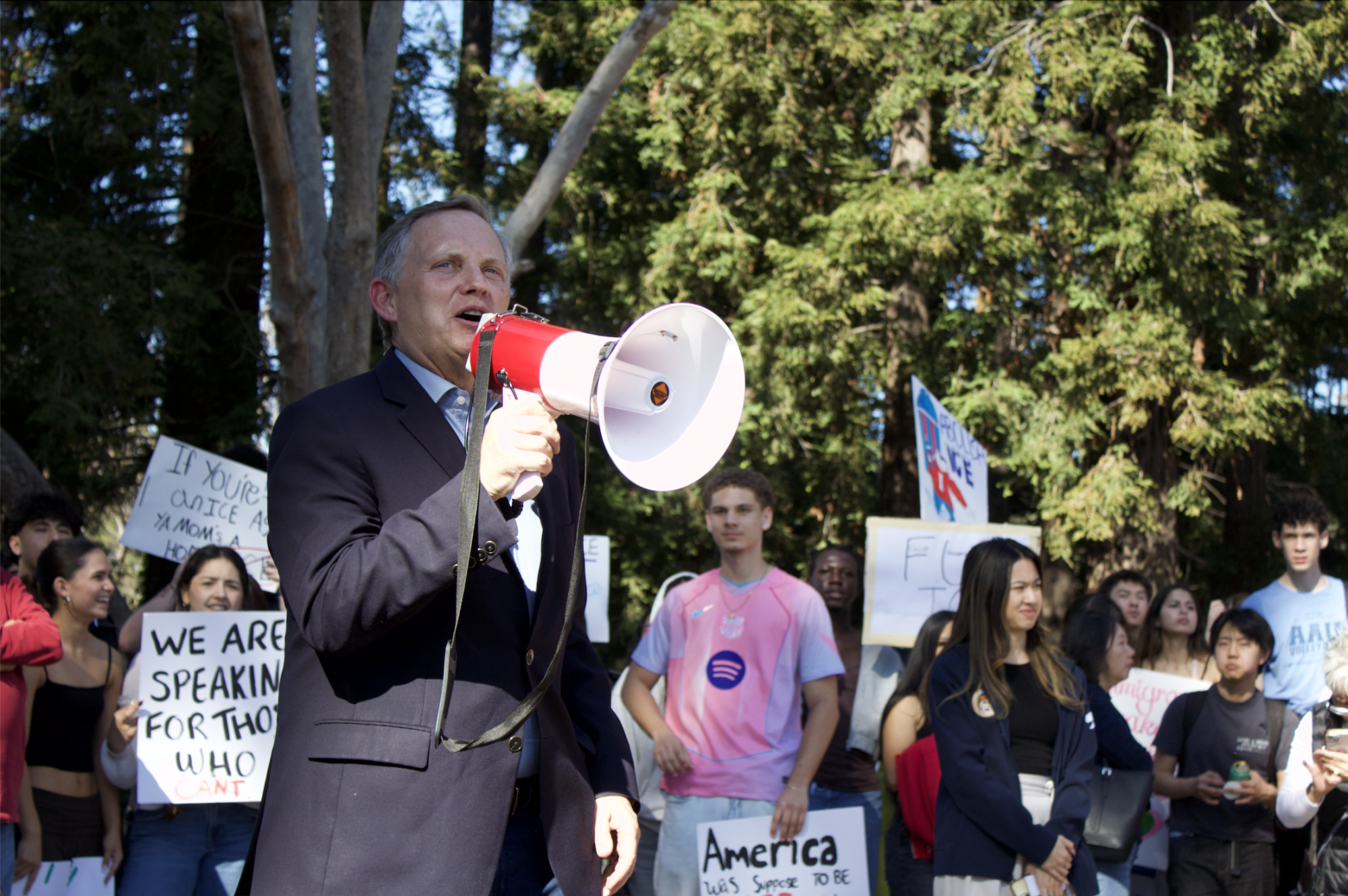
For students, the presence of local government figures and other caring adults empowered the protest atmosphere, senior Sydney Gutierrez, a protest leader, said.
“It was really important to have the deans, the principal and all of them there, supporting the students in their walk, because it made [us] feel comfortable with the choice [we] made,” Gutierrez said. “When mayor Klein came and gave his speech, it really brought everything together. It showed that he cares about what people have to say.”
Reflecting on the protest, Valdivia said attending adults left with a sense of pride over seeing students band together to drive social improvement.
“[The walkout] was one of my proudest moments here at Homestead,” Valdivia said. “It was very moving to see young people across the Bay Area take a stand. I felt very proud to be a Mustang that day.”
Beyond the demonstration, cooperation and support for recent student activism has fostered a deeper bond between students and staff, Valdivia said.
“From an administrative point, we were able to create a partnership. We said, ‘We will stand with you. We will walk with you, not against you,’” Valdivia said. “This strengthened our relationship, and it opened the door for [students] to feel like they’re going to be seen and heard and that we’re going to stand with them when they take a position like this.”