Every Thursday night from January to April, I made it my routine to spam-refresh HBO Max, hoping the familiar “new episode” banner would bless me with the most exciting hour of my day. All 15 times, “The Pitt” delivered, hooking me to my screen every second of the way.
Staged at the underfunded Pittsburgh Trauma Medical Center, “The Pitt” concluded its second season of hyper-paced emergency room mania on April 16. While season one introduces its characters, relationships and gritty, hectic setting, the medical drama’s second season focuses more on how doctors handle the pressures of running the hospital.

To no surprise, “The Pitt” has amassed a cult following with its unparalleled realism.
From suturing to intubation to complex surgery, the show uses practical effects and hundreds of real tools, intricate props and prosthetics for its medical procedures, making every scene as accurate and visceral as it is entertaining. Rarer cases on the show also involve recently published techniques and new technology, promoting medical advancements viewers would otherwise never learn about.
Professional consultation from behind the scenes further ensures accuracy and reflects a level of dedication to “The Pitt” that is matched by fans. By keeping details grounded in reality, actions and consequences carry greater weight, engaging viewers more effectively than any other medical show.
During and after operations, doctors’ wit and energy are weaved into their dialogue, cutting through thick strings of medical jargon and the stress of crucial procedures to sustain the ER’s tense yet thrilling atmosphere.
Throughout these cases, what especially piques my interest is how they tackle healthcare issues. This season, nurses and doctors adapt to financial constraints, cyberattacks and ICE and innovate with social media advice and street-level treatment, keeping each episode socially relevant and myself invested.
Although the show is believable in nearly all respects, real medical staff have acknowledged that in a short timespan, they typically do not face as many cases prompting visual spectacles of operations. While the show must slightly dramatize the number of these cases to maintain its boiling-point environment, they allow for the emergence of many rich subplots at once.
Most memorably, season two’s cancer case follows a family who grapples with the emotional tolls of hospice care, and in a separate case, a sexual assault victim deals with police response and solidarity among women. These focused scenes unpack a myriad of complex feelings that illustrate loss, connection and altogether, humanity, in a way that lets me understand and truly resonate with characters.
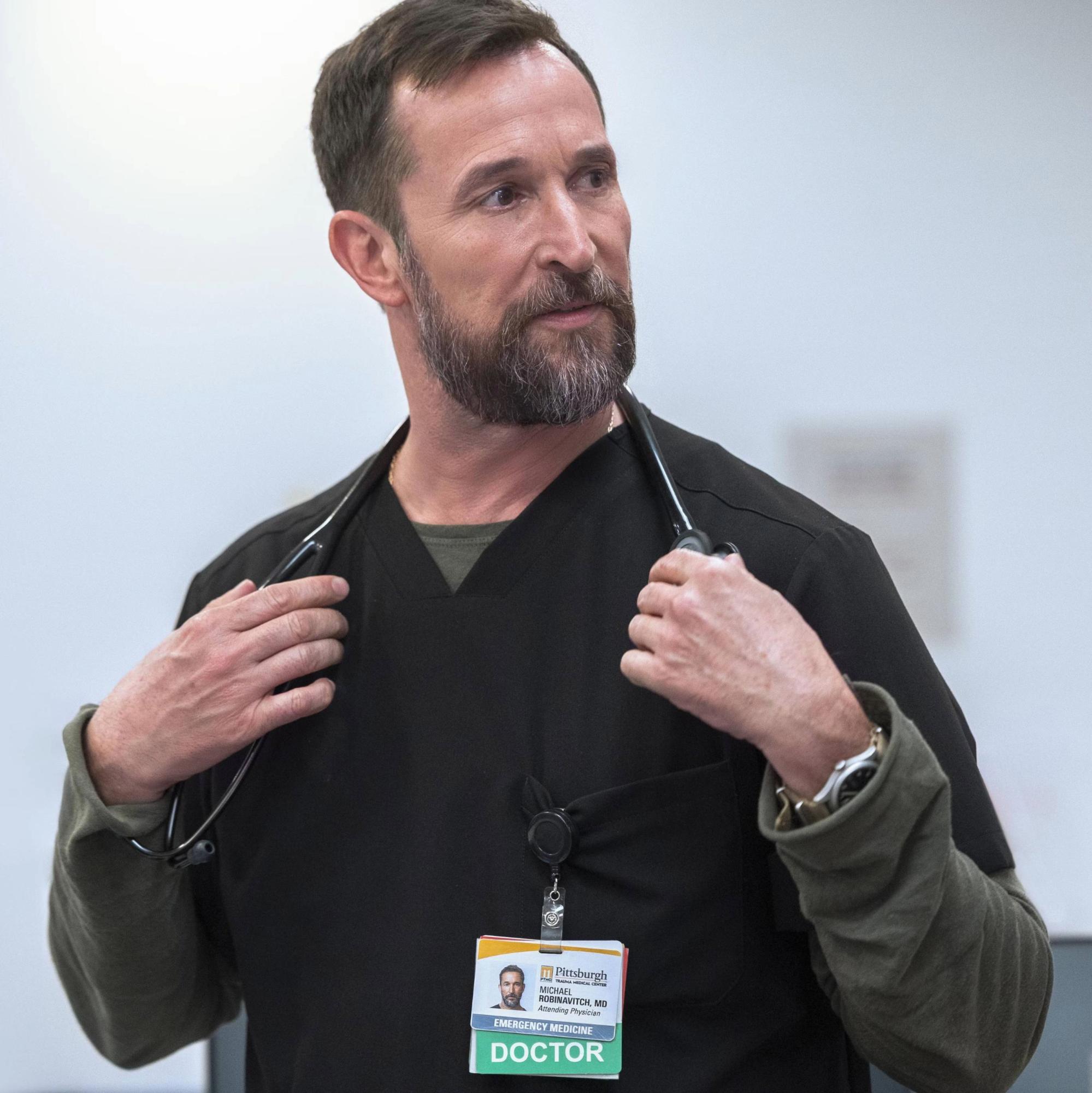
Beyond the medical cases, season two’s overarching message is built up through protagonist Dr. Michael “Robby” Robinavitch’s emotional turmoil.
Having planned to leave his shift as soon as possible for a long-awaited sabbatical, the attending physician feels chained to his leadership of the ER, seeing it as the only important thing in his life that gives him purpose but also crushes his soul. Robby’s bottled mental health struggles add worlds of depth to the show and establish an all-too-relatable inner tension.
However, viewers also learn to manage work obsession from taking his conversations with friends to heart and seeing people reject this norm. For instance, when new medical student Joy Kwon unequivocally rejects overtime, she sets healthy boundaries around her personal life and indirectly tells viewers to follow suit.
In all of these moments, “The Pitt” is literally kept alive and thriving by its talented cast. Led by Noah Wyle, an experienced medical show star who plays Robby, other actors include licensed professionals and broadway performers, while the majority are local or unknown talent. With these casting choices, creator R. Scott Gemmill supports the future of film by giving breakout roles to developing actors with novel styles.
The show’s cast also comes from a range of personal backgrounds that shape the personalities of doctors and patients, as well as the interactions between them. For instance, deaf patients, neurodivergent doctors and Filipino nurses are played by people who actually express these traits, establishing normalized and purposeful representation that is lacking in most modern shows.
As a whole, “The Pitt” excels through its meaningful presentation. Every episode shows one hour of 15 in a single hospital day shift, filmed with clean cuts between long panning shots in which every character is busy. From patients to nurses to doctors to administrators, this intricate choreography makes everything in the ER feel interconnected like the team effort it really is.
By tracking a few staff at a time, the camera immerses viewers in their growing stress and exhaustion. Furthermore, the continuous shots are littered with subtle clues, from split-second remarks to missing ID badges, that make the audience critically think about plot developments. This way, the show always captures attention with one thing or another, extending its impact far beyond the closing sequence.
Finally, as a busy Bay Area high schooler interested in joining the medical industry, “The Pitt” has given me a greater sense of admiration for healthcare professionals. Most of all, I am inspired by characters who handle stress through a spectrum of ways that personally speak to me and remind me to work hard but also prioritize my mental health.
In contrast with other mainstream medical dramas I have seen, such as “The Good Doctor,” “House” and “New Amsterdam,” “The Pitt” is in a league of its own with its much more realistic environment, diverse representation and deep portrayal of emotion.
As the soft guitar strum of its end credits roll, I am left beyond impressed by “The Pitt”’s second season. The dense medical drama has exceeded the sky-high bar of its previous shift, hitting all the spots of an unforgettable masterpiece and gracing the world with a profound love letter to healthcare workers.