As I pack up my lunch and walk to class, I spy a container of the cafeteria’s pasta bolognese sitting abandoned on the concrete. It looks practically untouched, filled with red tomato sauce and pale tubes of pasta. On other days, I have seen whole pizza slices left uneaten, a scrambled egg sandwich in the trash can, and I’m sorry to say, I’ve thrown food away myself.
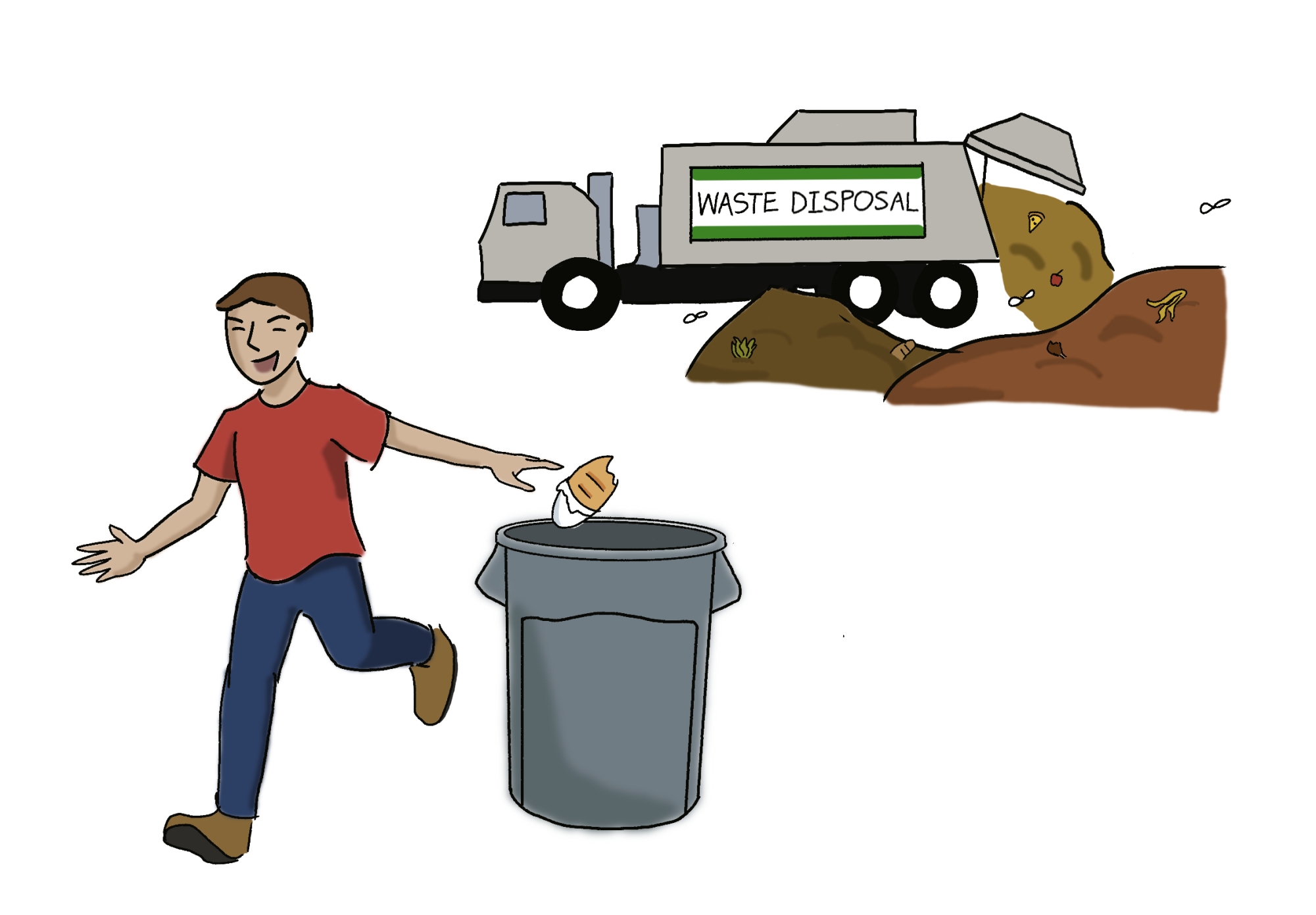
Over one-third of the food produced in the United States is never eaten, and food waste is the most common material landfilled and incinerated in the US, comprising nearly a quarter of landfilled municipal solid waste, according to the EPA.
Living in America, and especially California, where fertile soil yields billions of dollars worth of produce each year, means most of us have easy access to food. I, for one, am fortunate to have never experienced food insecurity, and sometimes, as I scrape food into the trash, I am acutely aware of just how desensitized to waste I have become.
When I was little, I was taught a Chinese poem that describes a farmer toiling in the fields to bring each grain of rice to the bowl. Today, we do not see farmers working under the burning sun or people standing over the stove. Food is offered to us pre-made at school, in shiny plastic cups or checkered paper boats.
Behind the scenes, though, the food service staff are hard at work to serve the long line students snaking their way into the cafeteria. When we throw food away, the time, effort and energy spent to make that meal is also wasted. A pasta bolognese here, an egg sandwich there may not seem like much in the moment, but it is still filling the garbage with food that someone could have eaten.
I find it shameful that we forget the people dedicating their time to making food for us, and deliberately choose to throw their efforts away. Even though it is tempting and easy to dispose of food you cannot finish or just do not like, at least try to do better. Pull your hand back from dropping food into the garbage can, and even that small action is a help in the fight to eliminate food waste.
Not only is it a pity that human labor is wasted, food rotting in landfills has a significant effect on issues that affect the world at large. Food loss and waste at various points of the supply chain account for 8%–10% of global greenhouse gas emissions annually, according to UNFCCC.
Producing food that goes uneaten also expends valuable natural resources such as water and land. Water used to grow surplus food in the US amounted to over 16 trillion gallons in 2023, and the land used would cover a total of 140 million acres, according to ReFED. This is an appalling tally, and while the majority of food waste is not specifically our fault, every bit of food thrown away contributes to it.
While the cafeteria does have measures in place to minimize food waste, efforts must be expanded. As a good start, the amount of cafeteria food needed is calculated each day based on previous data, and leftovers are donated to a local food bank, according to principal Denae Nurnberg.
However, I have noticed that there are almost no compost bins around campus, only trash and recycling. Even if a student wants to dispose of food waste more responsibly, it is incredibly inconvenient to do so, and food goes into the trash for lack of a better option. More compost bins should be added around the school in easily accessible places to encourage students to use them.
Ultimately, though, the best way to reduce food waste is to think intentionally about the food we consume. Students must restrain themselves from taking food they do not plan to eat and throwing it away unnecessarily. We must not let perfectly good food go to the ants, and worse, the landfill.