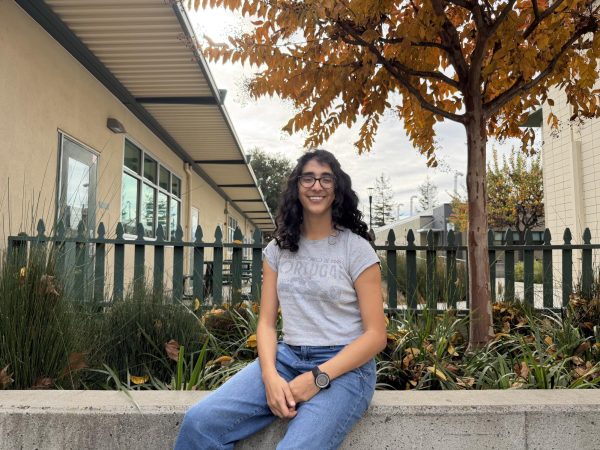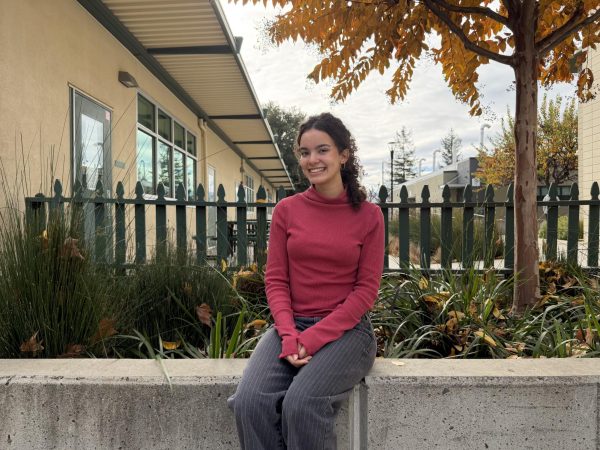
Indopak is a diverse dance club composed of five teams, including Bhangra, Bharatanatyam and Kathak, each highlighting a unique dance style from across India, Bharatanatyam captain, sophomore Sanvi Bharadwaj said.
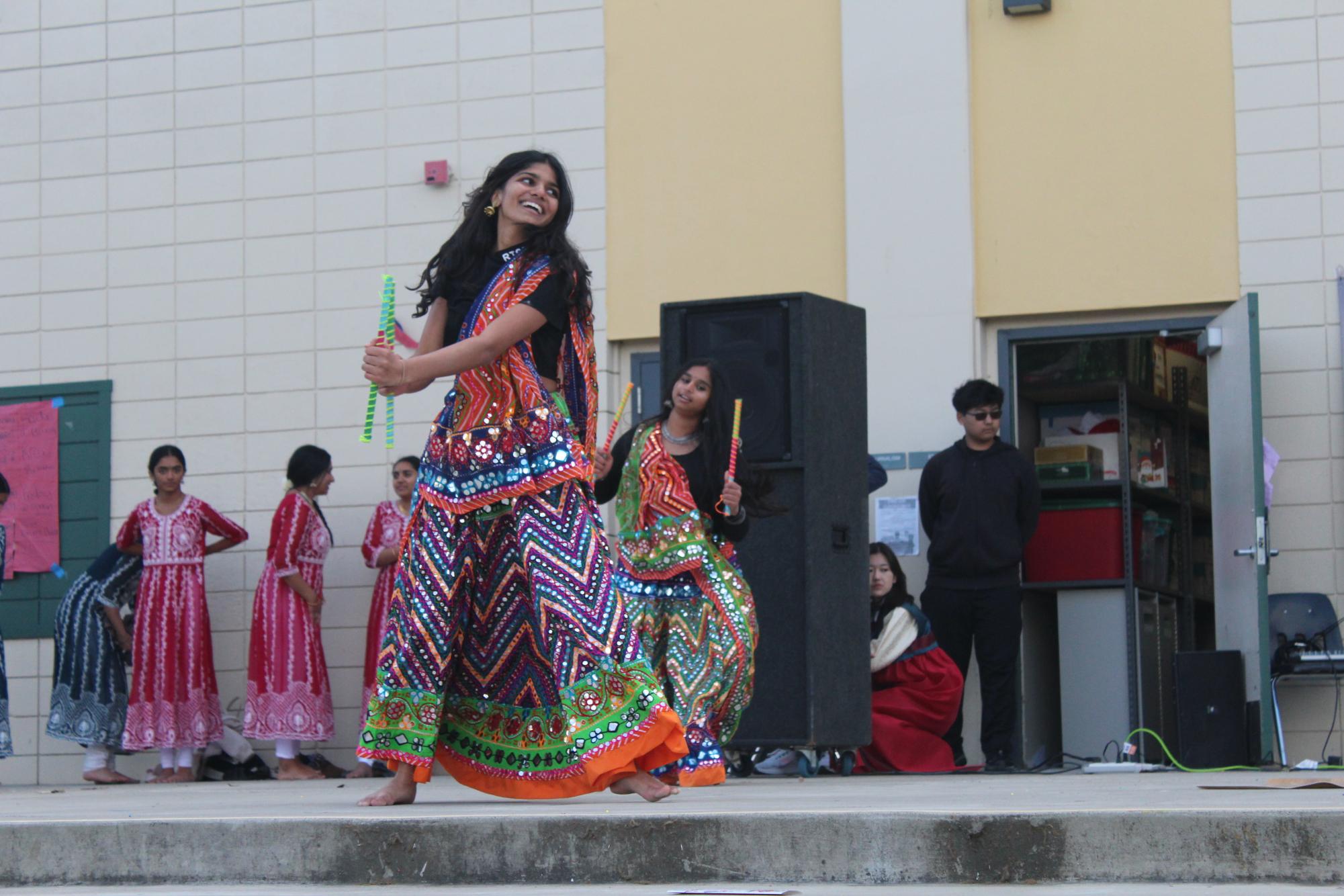
Bhangra
Bhangra originates from Punjab, and is traditionally danced to celebrate the harvest, with explosive moves based on farming techniques, captain, junior Jaya Singhal said.
Singhal said she began dancing Bhangra earlier in her life as a way to stay connected to her culture, given her father’s Punjabi heritage, and reconnected with the style in freshman year.
“I stopped doing [Bhangra] after the COVID-19 pandemic. I was interested in doing it again, but I didn’t want to join a professional team,” Singhal said. “The first rally I saw [Indopak] perform, I was like, ‘My God, that’s really exciting,’ so then I tried out.”
Despite her previous dance experience, Singhal said she had rarely done longer songs, and initially found the physicality of the dance hard to adjust to.
“I needed a lot more stamina than I expected because you’re just jumping for two hours,” Singhal said. “But when you start practicing, you get used to the movements.”
However, as long as beginners come motivated to learn the style, Bhangra can be a fitting team to join, Singhal said.
“Even if you’re flapping your arms around, if you’re doing it energetically and big, it will look good,” Singhal said. “If you come in with the excitement of wanting to do something new, it’s a really fun group to join.”
Bharatanatyam
Bharatanatyam originates from Tamil Nadu and is the oldest classical dance form in India. The style has been a significant part of Bharadwaj’s life since early childhood, serving as an avenue to honor her family members, she said.
“Back when I was four years old my mom made me join Bharatanatyam, because my mom really wanted to learn it when she was younger, but she didn’t have the opportunity to,” Bharadwaj said.
Experience is required to join the team, whose performances combine movement and music to portray a complex storyline, Bharadwaj said. When she first joined last year, Bharadwaj was intrigued by their unconventional, contemporary approach.
“[The style’s] very traditional,” Bharadwaj said. “I had never thought about it as a fusion where you’d do with pop music or Bollywood, which is the more modern type of Indian music.”
As a first year team captain, Bharadwaj said she aims to continue introducing new ideas, while still embracing the style’s traditionality.
“What I really like about blending [Bharatnatyam and modern dance] together and bringing that into HHS is we get to tell stories, not just about ancient stories that we would normally do, but put our movements into more modern and more relatable things for people of our generation,” Bharadwaj said.
Kathak
Originating from Northern India, Kathak is a dance often used to retell mythological stories, captain, junior Niki Lakhani said.
Like Bharatanatyam, Kathak requires previous experience to join the team, as the captains are not qualified to teach the intricacies of the dance to beginners, Lakhani said.
“You study under a Guruji [who] brought the dance form over from India, so they want to keep it as close to the traditional dance as possible,” Lakhani said. “All the complexities are just to get a story across better [through] the way you raise your eyebrows, to the way you tilt your head.”
While practicing for long periods of time can still be taxing, Lakhani said Kathak relies more on agility than strength compared to other Indian dance forms.
“It’s not super physically demanding, but you do need to have good control of your body,” Lakhani said. “There’s a lot of fast turns, which means you have to have good core strength and control of your shoulders and neck.”
Lakhani said she enjoys the collaborative aspect of choreographing each performance, a level of independence often unavailable when studying under a teacher.
“[The performance] turns out so much better than if one person was just choreographing the whole thing, because you got many different perspectives,” Lakhani said. “Each person brings something new and everybody gets their moment to shine.”