“Club president” has become one of the most valuable titles on campus. It shows up on college essays, student webpages and LinkedIn profiles as a badge of leadership.
However, to maintain illustrious officer roles, clubs on campus are using loopholes in the weak accountability systems.
To increase accountability for clubs on campus, ASB must rework its club auditing system by strengthening the security of their current system or implementing new verification tactics, such as random club meeting verifications. With a stronger auditing process, campus organizations can receive proper funding from ASB.
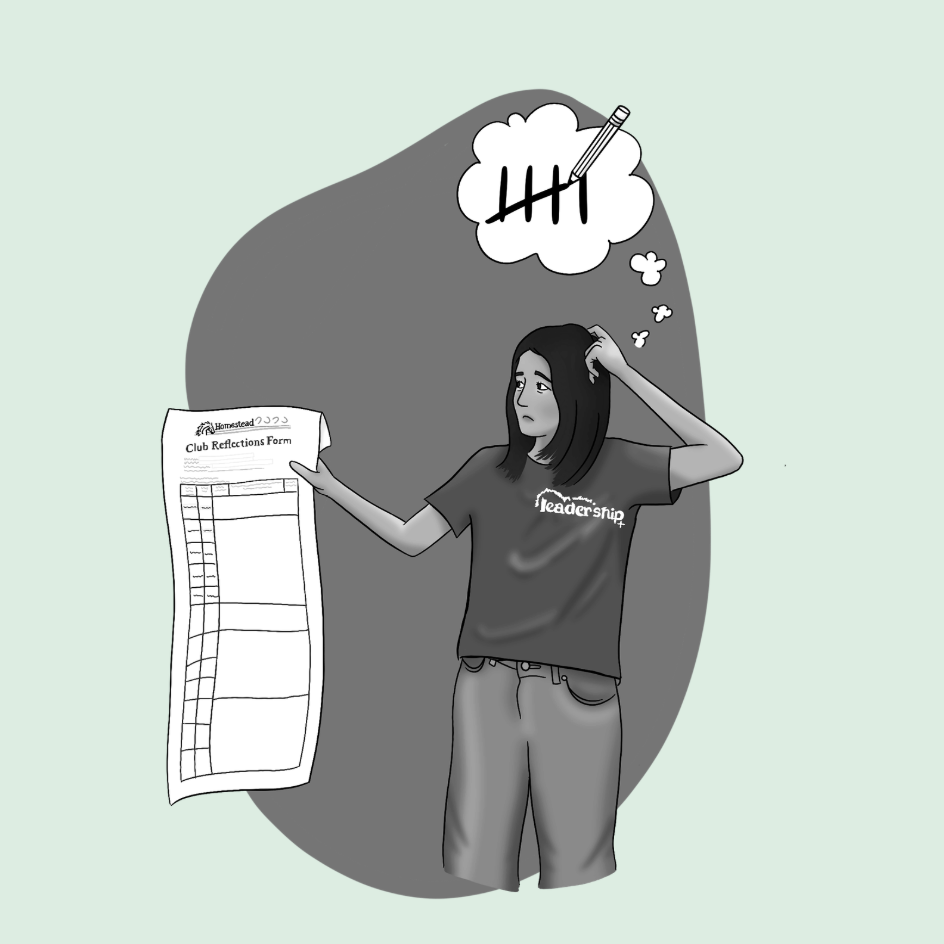
Currently, clubs are required to submit Club Quarterly Reflections to remain active. The CQR is a form in which clubs must outline essential information regarding personnel, meetings and events, leadership teacher Hector Almendarez said.
CQR forms require club officers to also submit meeting minutes, a type of meeting notes along with each entry for an officer meeting in the form, Almendarez said. The current CQR system makes it easy for club executives to engineer meeting minutes that are attached to CQRs.
However, these minutes are extremely easy to fabricate. ASB club commissioners and advisers are unable to check when they were written, so there is no way to ensure the meeting took place.
Loopholes even exist in the strongest aspects of the system. Clubs are required to submit a photo to show that at least one event was held during the year.
Unfortunately, this system allows club officers to justify a club’s existence with a photos of one small event, or worse, a false claim backed by older photos.
The broader impact of fabricated CQRs and inactive clubs on campus is that they still receive access to ASB funding. When clubs are inactive but ASB is unaware, underfunded programs lose the chance to receive money, especially when they have regular meeting occurrences and other clubs do not.
To better facilitate funds for all clubs, ASB must rethink its auditing and verification system by selecting a random percentage of clubs to verify each quarter.
In this process, ASB officers would select random club meetings to attend across campus in order to ensure that meetings are happening on a regular basis and that there is a student base for all clubs on campus.
Currently, clubs receive strikes for failing to submit CQRs and having communication issues, Almendarez said. If a club is unable to provide a meeting date and time to ASB, the club should receive a strike in the current system.
Implementing stronger CQRs and random club verification will make faking evidence and club meetings substantially harder. In turn, the strike system will be more effective because it will become better at policing clubs.
In its current form, the CQR system is ineffective at measuring club activity or holding officers accountable. To make clubs maximize useful spending, ASB must enforce the CQR system with real verification through strong evidence or accompany the current CQR system with random club verification tactics to hold clubs to the highest possible standard.