Scrolling on social media, I came across a new song going viral: “Internet Girl” by the global group KATSEYE. Humming along to its looped chorus, I searched the song up and listened to it, only to be greatly disappointed. While the 10-second chorus was decent, the lyrics were extremely shallow, and the song completely lacked a message.
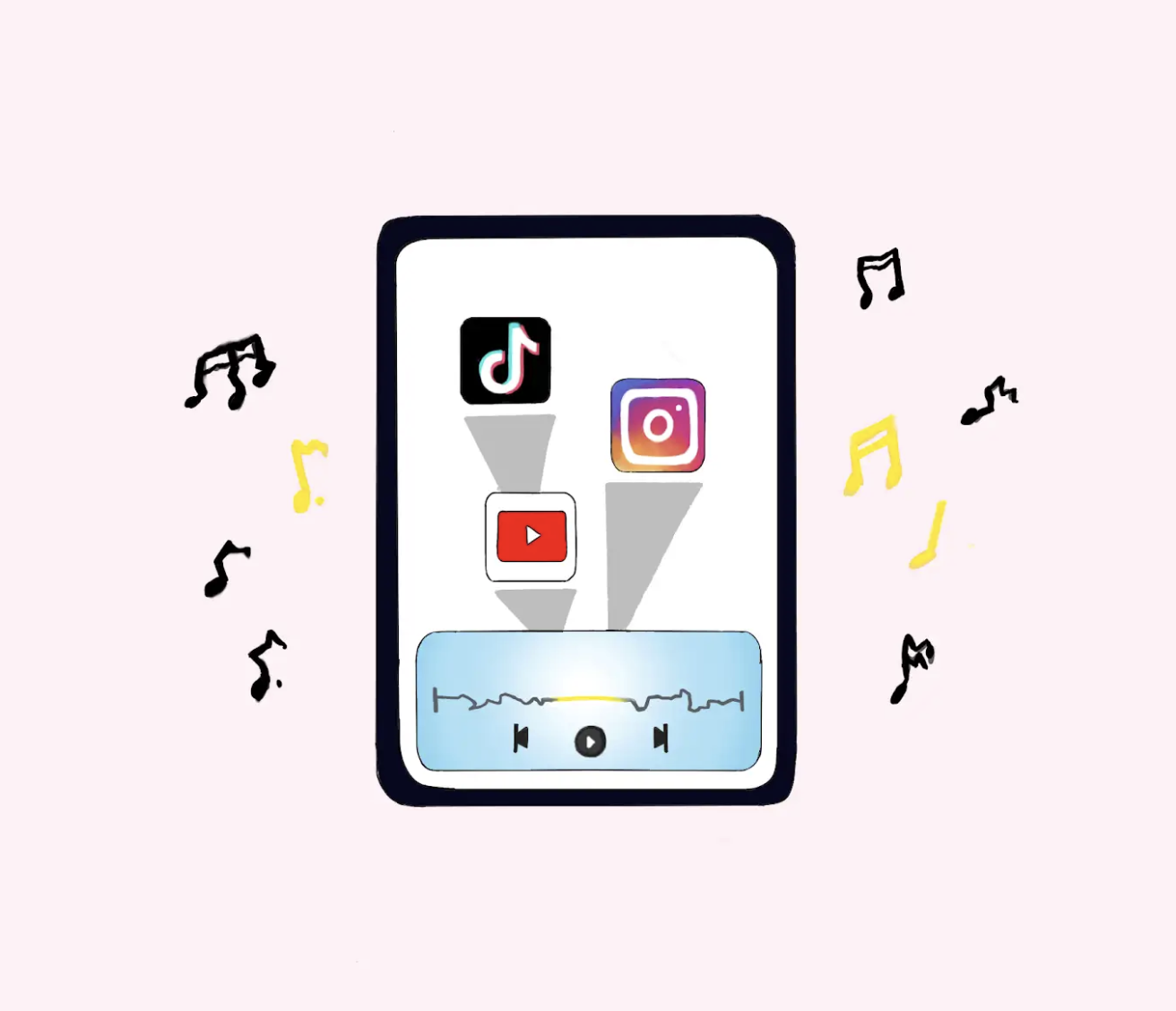
Since the rise of short-form platforms like TikTok and Instagram, people’s attention spans have reduced, according to APA, making long song intros and slow buildups unpopular.
There is a 24.12% likelihood of a song being skipped within the first five seconds, according to Spotify. This shift discourages artists from taking creative risks, enforcing the idea that music must deliver instantly to hold people’s attention.
To accommodate people’s reduced attention spans, songs are also becoming increasingly shorter. They went from averaging around 4 minutes and 20 seconds in the 1990s to just barely above 3 minutes in the 2020s, according to a study from UCLA.
Many songs recently released reveal the response to this growing issue. Their verses are underdeveloped, bridges too shallow, with only a small part of the song standing out. Many people, including myself, often immediately skip to the “good part” of the song and listen to only that section on repeat. Rather than crafting a cohesive, meaningful song, artists focus on making “sound bites” that are easily adaptable to trends.
As a result, purposeful lyrics and songwriting are often cast aside for the sake of popularity and fame.
Furthermore, verses, bridges and outros are treated like filler around the chorus instead of adding value, shortening tracks and sacrificing meaningful songwriting to fit algorithms.
In addition to exacerbating the quality of songs, social media also cycles through music very quickly. Many songs become popular for a few weeks and disappear, usually when the trend associated with the song dies or people move on to a new aesthetic. This rapid turnover causes audiences to only recognize short clips instead of full songs or albums.
Besides the song itself, past trends, such as the “Purple Rain” trend, have shown that viral hits can generate massive fanbases, but these are short-lived, as fans move on quickly with the algorithm. Out of 1500 songs that went viral on TikTok in 2020, only 125 were from relatively unknown artists, according to The Pudding. While social media can serve as a tool for artists to gain exposure, it’s rare to cultivate a base of dedicated, long-term listeners.
To stay relevant, artists’ social media accounts include them participating in these viral trends with their trending audios, forcing them to become influencers and use such platforms to promote their music.
Instead of engaging with songs that rely solely on viral moments, listeners should choose to support artists who prioritize thoughtful songwriting, strong verses and meaningful storytelling. Streaming entire songs, attending live performances and following artists instead of trends can shift the music industry away from disposable songs to ones with depth and longevity.
Once listeners’ mindsets change, artists will have a reason to create artistic and dedicated music that lasts far beyond just a few days.