California passed Assembly Bill 3216, the Phone-Free Schools Bill, last August, mandating greater cell phone restriction measures across all school districts. With the bill taking formal effect July 1, 2026, HHS administration has begun standardizing phone policies across campus this year, principal Denae Nurnberg said.
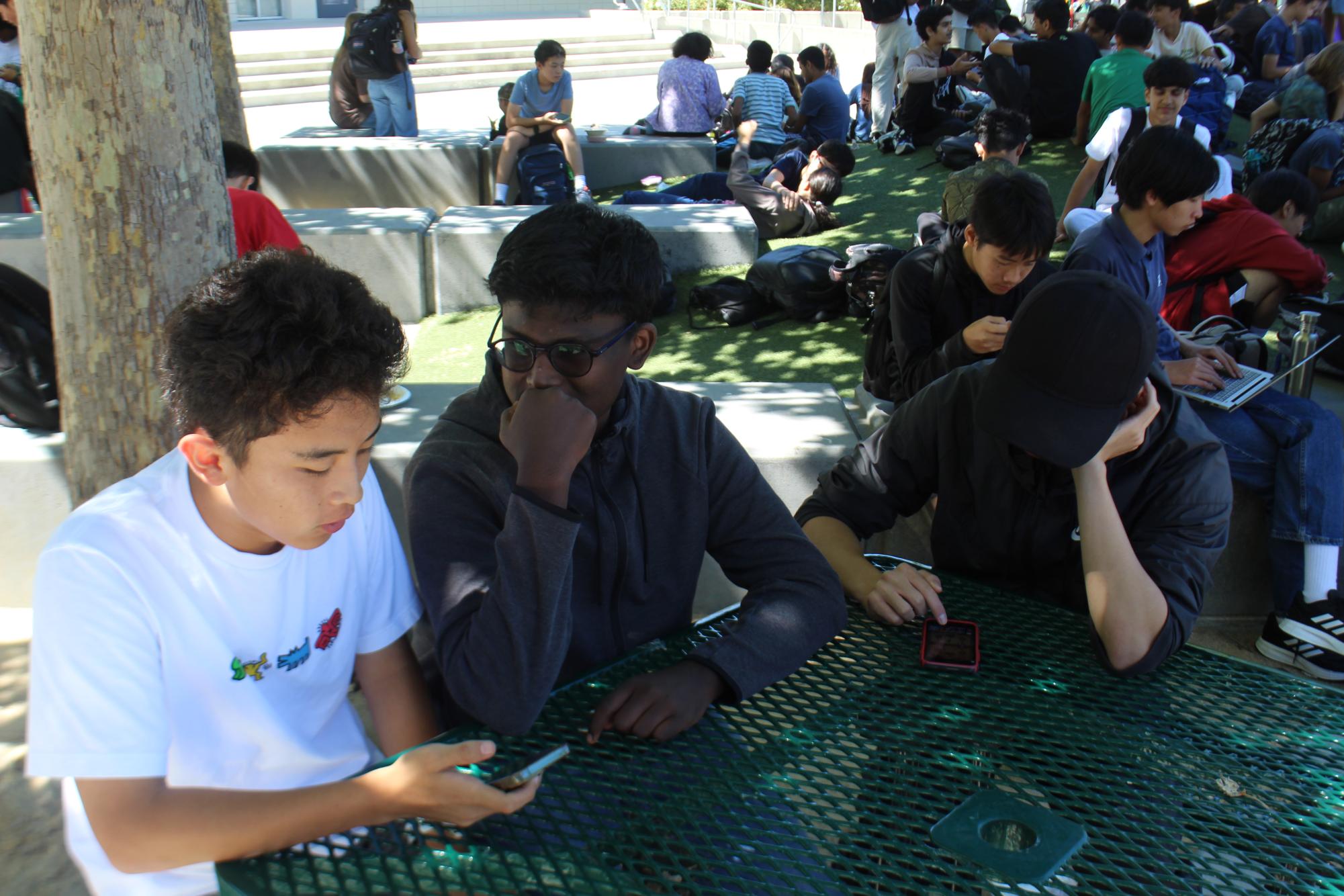
The current policy states all phones must remain off and away in classrooms to reduce learning distractions, Nurnberg said. While students retain access during brunch and lunch, teachers control tutorial phone usage, Nurnberg added.
“We need to do some more work around [defining] acceptable uses of tutorial before we define how we would or would not have a uniform approach to tutorial cell phone restrictions,” Nurnberg said.
The bill will minimally impact classrooms already employing restriction measures like phone caddies, Nurnberg said. Those with more lenient policies will see the most change as rules tighten, Nurnberg added.
However, the bill also presents inconveniences for students who use phones for academic tasks, junior Dani Brill said.
“There are a lot of activities where we use our phones. In Japanese class, if we don’t know a word, we’re allowed to look up a translation on the internet,” Brill said. “A lot of the time when we’re doing a Kahoot, you can use your phone or computer, and the phone is a lot more convenient.”
Additionally, students may lose phone-related privileges they previously enjoyed, junior Deja Saipaia said.
“I like listening to music during class, and that’s something I can’t really do on a Chromebook, so it’s nice having my phone for that,” Saipaia said. “I would be sad if I had to go through class when I’m having a bad day and [not] be able to listen to music that entire period.”
Despite increasing restrictions, Saipaia said students might still get distracted by other devices, limiting the efficacy of the ban.
“I feel like [phones] wouldn’t be a main source of distraction,” Saipaia said. “For a lot of things people do on their phones, they’ll find another way to do it on their computers, like playing games or scrolling through social media.”
Although the current system is not perfect, the bill will hopefully serve as a stepping stone for eliminating digital distractions, social studies teacher Christy Heaton said.
“I think the benefits are going to be huge in terms of being able to focus on learning rather than being distracted by a text message,” Heaton said. “Students can do on their computers just about everything they can do on a phone, but I hope this makes it harder or makes someone think twice before they do those things.”